by Rabbi Scott Klein
Serving as a Jewish Army chaplain, endorsed by JWB Jewish Chaplains Council®, is a calling that defies a standard desk job. This past week, as the Jewish community worldwide gathered to recount the journey from slavery to freedom, I found myself navigating a modern Exodus across the Fayetteville and Fort Bragg area. From the state capital to the jump towers of the 82nd Airborne Division, Passover 2026 has been a powerful testament to the strength and diversity of our military community.
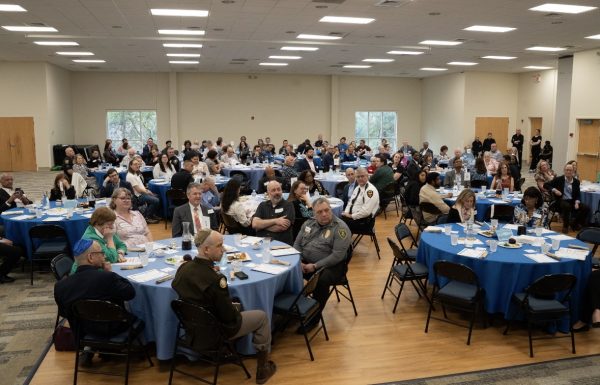
My week began at the Intercommunity Seder hosted by the Jewish Federation of Greater Raleigh. Breaking matzah alongside elected representatives and public safety officials served as a vital reminder of the deep ties between our military installations and the surrounding community. These partnerships ensure that our service members are never truly alone, even when far from home.
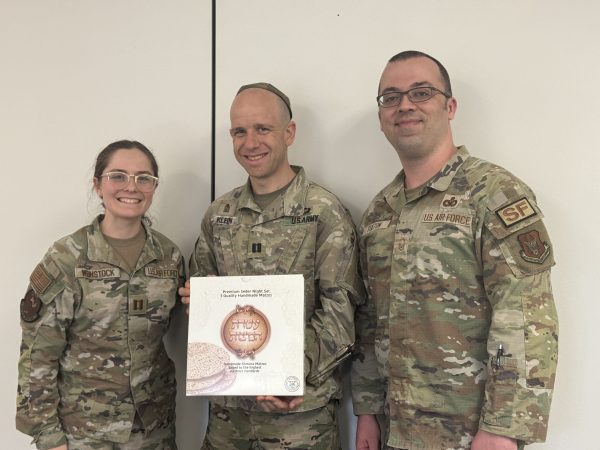
The mission then took me to Seymour Johnson Air Force Base in Goldsboro, North Carolina, where I led a Passover class for our Airmen. There is a unique energy in discussing the themes of liberation and sacrifice with those who protect our skies. During the festival, I also had the profound honor of promoting a new U.S. Army Psychological Operations Sergeant and celebrating the graduation of another. Seeing these young leaders advance in their careers while honoring their heritage is the best part of this job.
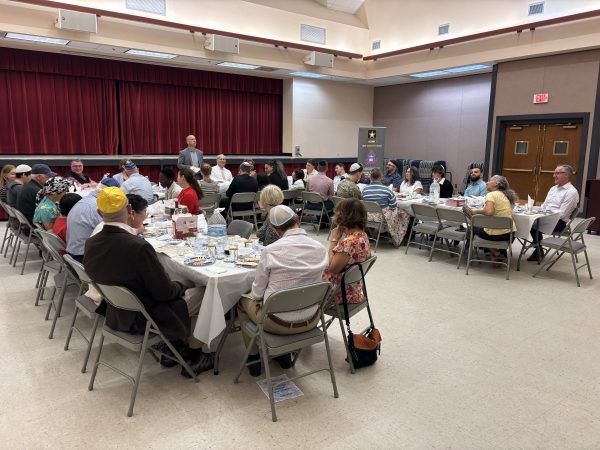
One of the most powerful moments of the week occurred right here on Fort Bragg. We hosted a communal first-night Seder at the Watters Center, and it was incredible to see our community come together. Across our various programs, we shared the traditions and spirit of the Festival of Freedom with over 300 participants, including soldiers, families, and community members. Looking out at a room filled with military families and personnel, I was reminded that the Seder table is a place of absolute belonging. We shared the traditional meal and the story of the Exodus, creating a temporary home for those whose service often demands they leave their own loved ones behind.
The reach of our chaplaincy work didn’t stop at the base gates. I was able to lead a virtual Passover program for a state prison and supported a Seder at Beth Israel Congregation in Fayetteville, North Carolina. By organizing events that included both the Fayetteville area and several nearby military installations, we were able to strengthen the unity between our military and civilian communities. Throughout the week, I made it a point to visit various military units across the installation, ensuring our amazing paratroopers and service members had the spiritual resources and support they needed to observe the holiday.
Supporting the soldiers of Fort Bragg and the wider community during Passover is an incredible honor. It is a reminder that even in the midst of training and deployments, our traditions provide a steadfast anchor. For those who feel a similar calling to serve both their faith and their country, I cannot recommend this path enough. As we move toward Shavuot, I am inspired by the resilience of our service members and the enduring power of our shared community.
Rabbi Scott Klein is a chaplain within the 82nd Airborne Division and the garrison rabbi at Fort Bragg, North Carolina. A champion of education and leadership, Rabbi Klein holds a doctorate in educational leadership and a master’s degree in Jewish professional studies with a focus on non-profit management. His rabbinical ordination is from the Academy for Jewish Religion in Yonkers, New York. If you are interested in exploring a career in military chaplaincy, he would be happy to discuss how you can have an impact on the lives of U.S. service members.
Photos courtesy of Rabbi Scott Klein.