By Rabbi Aaron Gaber
Military chaplains provide religious support to members of their own faith denomination and ensure the free exercise of religion for every member of the military. We provide religious support to every soldier of every faith—and of no faith. This mandate was embedded in our mission when General George Washington created the Army Chaplain Corps in 1775. Catholic chaplains were added in the 1840s, and one of the first three Jewish chaplains in America, Rabbi Jacob Frankel, was appointed during the Civil War by President Abraham Lincoln in 1862. Since then, Army chaplains, in particular, go with their soldiers, eat and sleep where they are assigned, and support their units religiously, spiritually, and pastorally.
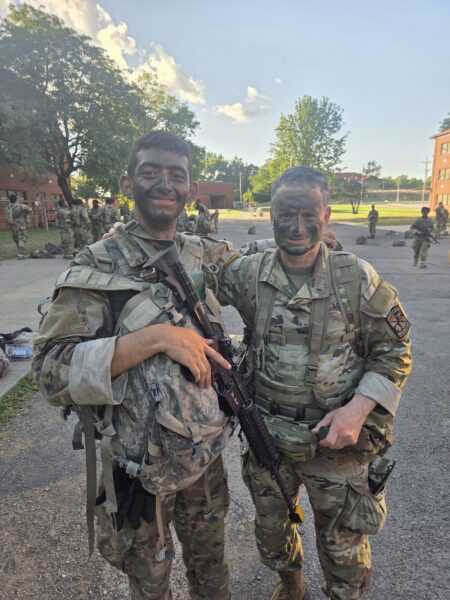
As a military chaplain endorsed by JWB Jewish Chaplains Council®—a signature program of JCC Association of North America and part of its Center for Jewish Peoplehood—and a major in the Army National Guard, I spent the summer at Fort Knox, Kentucky. There I supported ROTC cadets as the medical support chaplain and provided religious services to Jewish cadets. As future Army officers, their military and leadership skills were rigorously tested throughout the month-long program. Some cadets will become commanders, generals, or Army chiefs of staff. Many are college students, enlisted soldiers training to become officers, or ROTC scholarship recipients. All want to serve and protect the U.S., with ambitions to enter various Army branches or become chaplains. Cadet summer training (CST) boosts their resumes and opportunities. As a member of the National Guard, I’m especially proud of cadets aiming to serve as Reserve and National Guard officers who will support citizen soldiers balancing civilian and military roles. A total of more than 7,100 cadets and 3,000 cadre members—who instruct, mentor, and evaluate recruits—trained this summer.
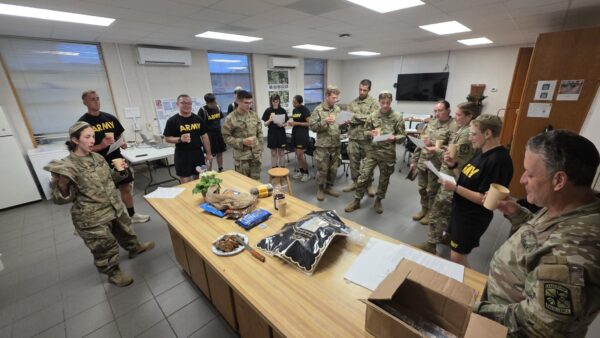
My essential role was to provide pastoral care and religious support to cadets and cadre who were injured or became sick. In addition, I liaised with regimental chaplains who wanted updates on their particular cadets; provided professional chaplain training to more than 20 chaplains and religious affairs specialists who supported CST; and mentored, coached, and served as a confidant to fellow chaplains, helping them handle the professional and personal challenges of caring for people experiencing some of the most stressful moments of their lives. I was the “caregivers’ caregiver.”
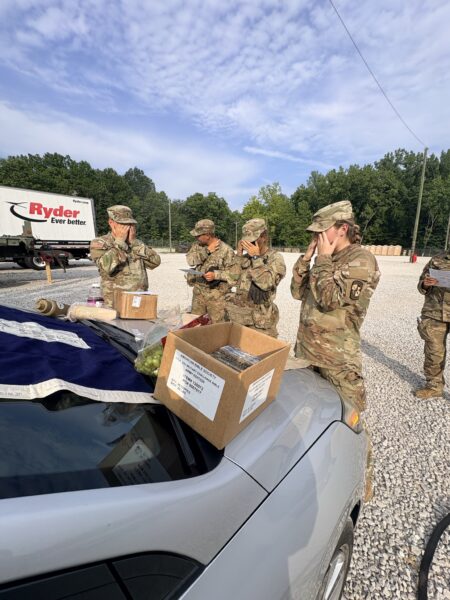
By far, the best— and most fun—part of the summer was serving as the chaplain to Jewish cadets. Each week, I provided a Shabbat experience, Jewish learning, and counseling through a Jewish lens to help them grow and meet the challenges they faced as cadets and as Jews. In this role, I participated in six-mile ruck marches, all of us carrying heavy backpacks and combat gear. Before and after the marches and land navigation exercises, and before rappelling off a 60+ foot tower, I offered prayers for all, as well as prayers for a speedy recovery for cadets who fell ill during the summer training. When Shabbat arrived, sometimes Jewish cadets could be in the chapel for a Friday night service and celebration, but most of the time, I brought Shabbat to them—and I am grateful to the cadre members who made sure their cadets could attend. On one Friday night, they picked up five cadets—out of the six hundred they were caring for—and brought them to a central location where we celebrated Shabbat by lighting tea light candles set up on the hood of my car. On other Shabbatot, cadre members brought me deep into the woods to their patrol base to deliver challah, grape juice, and cookies to help Jewish cadets celebrate their faith. Knowing they were being cared for religiously, always boosted their morale—and that of their battle buddies because there were always extra cookies to share! When I couldn’t get to the Jewish cadets myself, I am grateful that my chaplain colleagues of other faiths brought Shabbat gifts to their Jewish cadets.
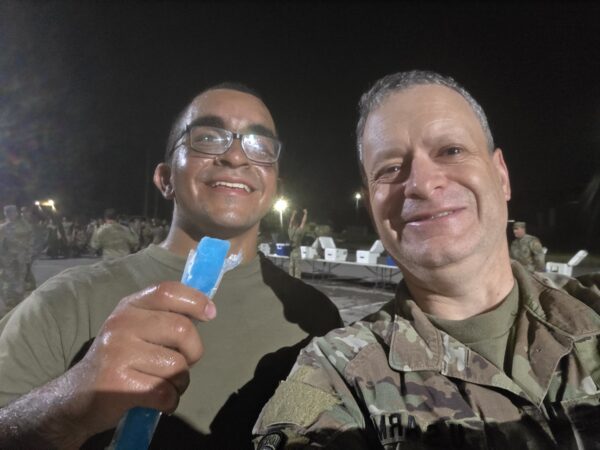
As a rabbi, my mission, which lives close to my heart, is to bring Shabbat and Judaism to every Jewish person no matter where they are in that moment. This summer, that meant going out into the field to make Shabbat with cadets individually or as a group. It meant meeting them—and all the cadets—with popsicles at 2 a.m. as they finished their final 12-mile ruck march. It meant teaching and sharing Judaism and its relevance with these future leaders.
Like my cadets, I know how powerful it was to receive care packages from many Jewish organizations when I was deployed away from home and family, but most especially from JWB Jewish Chaplains Council®. Each one ensured I didn’t feel isolated or alone as a Jewish soldier far from the Jewish community. As a chaplain, I always help connect our soldiers to each other and their religious faith, but this summer was especially meaningful because I helped ensure Jewish cadets experienced that same connection to the larger Jewish community.
Sometimes religious freedom and Jewish expression are found in a chapel filled with worshippers. Other times, it is found when a handful of Jewish cadets gather around the hood of a car to light Shabbat candles at Fort Knox. And sometimes, for me as a chaplain, it is found when walking through the woods with challah, cookies, and grape juice for one soldier, so he or she knows they and their faith matter.
Rabbi Aaron Gaber is a former congregational rabbi and is excited to have recently started working for AJC: New England as the assistant director for programming and advocacy. He continues to serve in the Connecticut Army National Guard and is grateful to his wife, Sharon, for her tremendous support and sacrifices, which, as in all military families, make his service possible.